
Canadian AC90 cable and US Type AC can share a metallic appearance while having different internal bonding constructions. A factory enquiry should identify which family is required before any price comparison. For AC90, the insulated conductor set and integral copper bond deserve as much attention as the armour.
Inside the cable
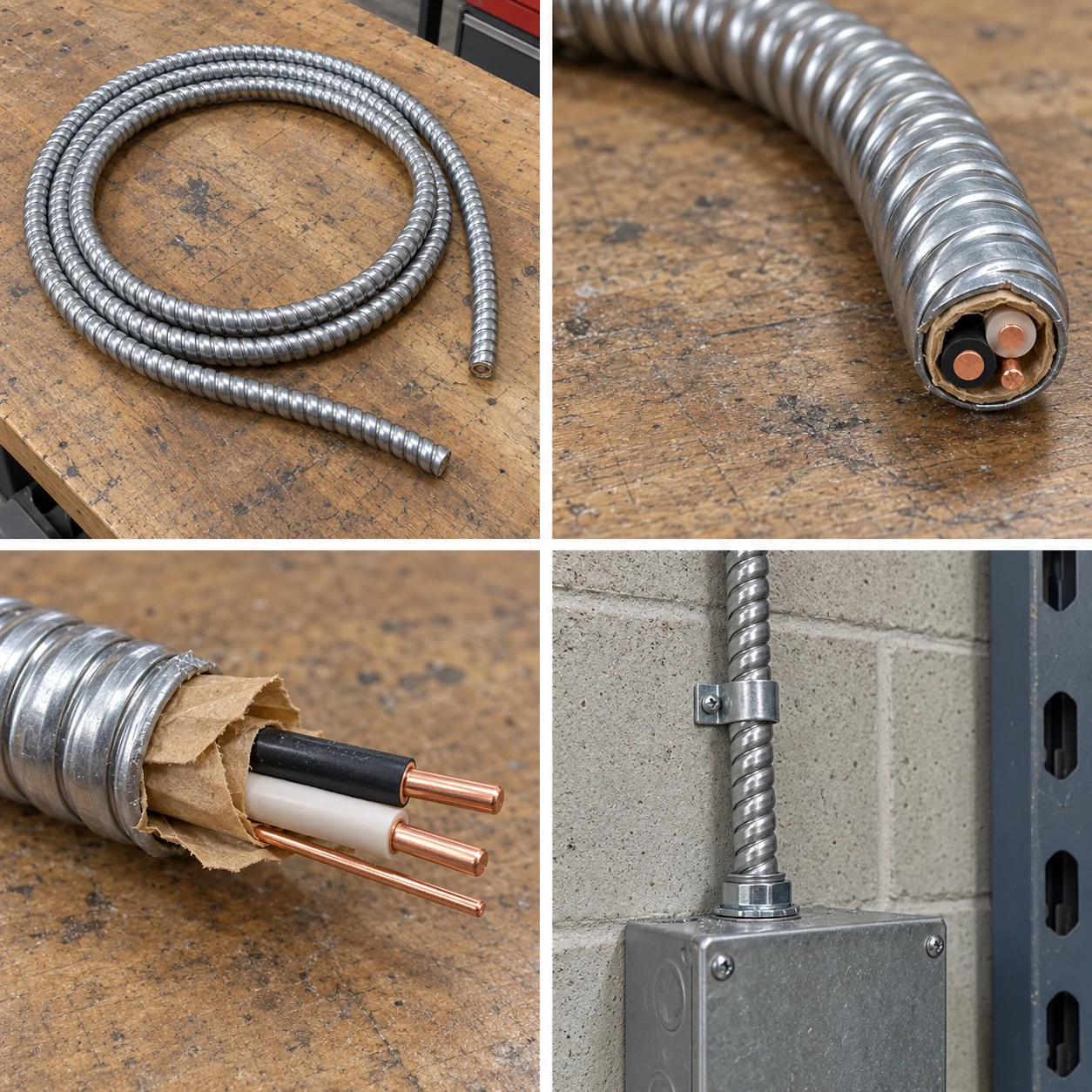
The representative AC90 assembly has RW90-insulated copper circuit conductors, a bare copper bonding conductor, binder material and interlocked metallic armour. The selected branch-circuit version has no overall plastic jacket. Its full copper bond should not be replaced in a drawing by the slender aluminium bonding strip found in a traditional US Type AC reference. Core colours and solid or stranded construction follow the selected configuration.
Where it is used
AC90 is used for permitted exposed or concealed wiring in dry locations, including appropriate dry cable-tray applications under Canadian requirements. It is a useful procurement family for commercial buildings and electrical distributors that need ready conductor-and-armour assemblies. A project requiring wet, buried or corrosive exposure needs a different specifically suitable construction.
Ratings and selection points
The 90 designation should be read with the cable’s actual insulation and application data, while ampacity still follows the full installation. Bare armour does not make AC90 a wet-location cable. ACWU90 has an overall protective jacket and different environmental scope. Compatible armoured-cable fittings, minimum bend radius and bonding arrangements should be checked with the chosen product rather than copied from another metal-clad family.
A clearer factory RFQ
An AC90 12/2-with-bond RFQ should define the two insulated copper conductors, bare copper bond size, armour metal and length per coil or reel. Identify the dry-location application and Canadian approval requirements. If a supplier offers US Type AC or jacketed ACWU instead, resolve the type and grounding differences explicitly.
Compare the TGS AC90 configurations for the available reference size tables. State the required conductor resistance, nominal dimensions, test documents and marking for the exact order. Reference tables and illustrations guide the enquiry; the agreed drawing and approved specification define production.
Manufacturing in Vietnam with TGS
TGS Cable Industrial is a large manufacturing group producing wire and cable in Vietnam. The group has served Costco, Walmart, Target and many other customers for more than five years. That company-wide experience informs our work with importers, distributors and retail supply programmes. For your AC90 enquiry, our factory team reviews the construction, destination requirements, quantities and packing before confirming the order.
Explore our Vietnam factory production capability, or send your cable specification to discuss a factory quotation. Product approvals and customer-specific requirements are reviewed for the selected construction and programme.
Frequently asked questions
Is AC90 the same as US Type AC?
No. The representative AC90 has an integral bare copper bonding conductor. Traditional Type AC uses its armour with an internal bonding strip as a different grounding construction.
Can AC90 be used underground?
The ordinary unjacketed AC90 reference described here is for dry locations. Review a suitable underground-rated jacketed cable instead.
Technical references
Manufacturer references explain the representative cable family and construction. They do not certify a TGS product. The agreed order drawing, product marking and applicable approval documents define the supplied cable.